
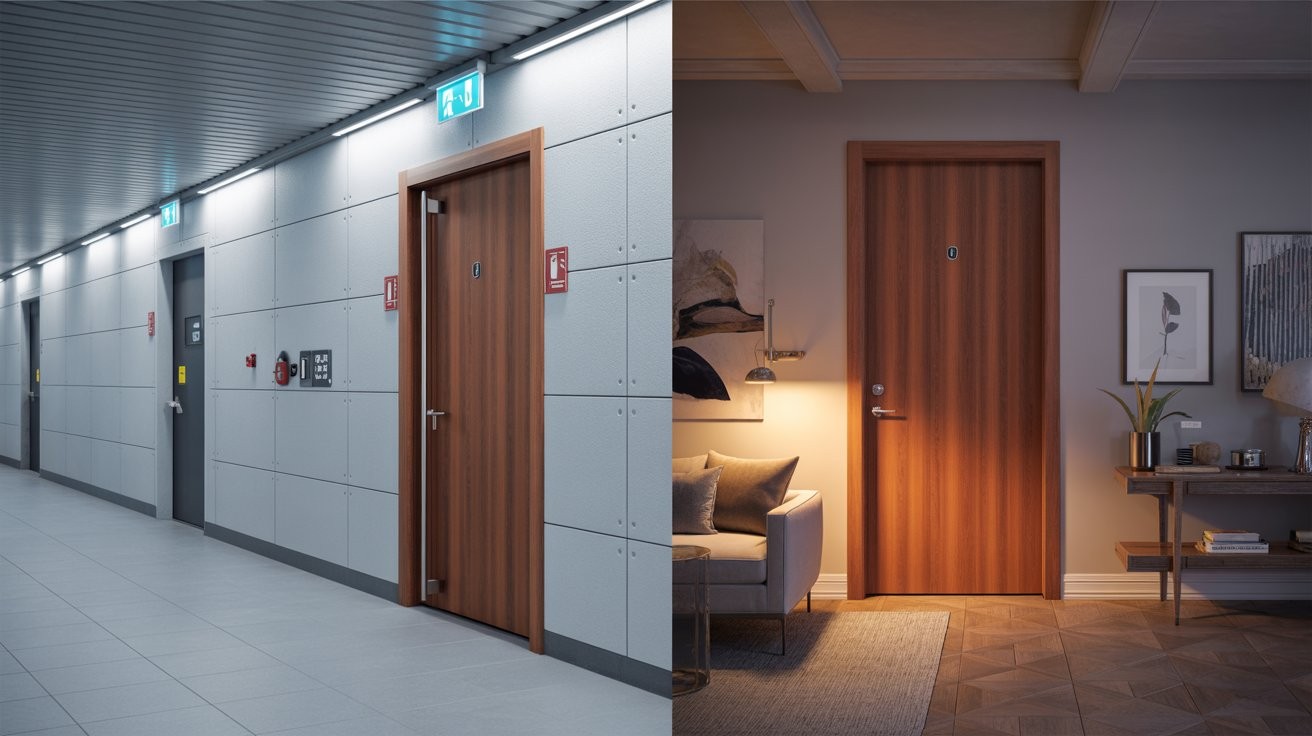
When discussing fire safety, most people immediately think of alarms, extinguishers, or sprinkler systems. However, one of the most critical safety components in any building is often overlooked. Fire-rated doors play a quiet but powerful role in protecting lives and property during a fire emergency.
Although both commercial and residential buildings use fire-rated doors, the requirements, construction, and regulations surrounding them are quite different. Understanding these differences is essential for property owners, developers, and facility managers who want to ensure proper compliance and maximum safety.
Let us take a closer look at how fire-rated doors function and what sets commercial and residential applications apart.
What Are Fire-Rated Doors and Why Do They Matter?
Fire-rated doors are specific types of doors constructed in such a way that they can prevent the spread of fire and smoke for a specific duration. This duration could be anywhere from 20 minutes to multiple hours, based on the door's rating. Their construction consists of the use of materials that go through intense tests to certify they are capable of tolerating very high temperatures and retaining their structural strength during fire. Key reasons why fire-rated doors are important include the following:
- They play a crucial role in providing the occupants extra minutes to escape during a fire.
- Fire-rated doors are designed to be containment barriers preventing the spread of flame and smoke. In this way, they help to reduce the damage caused by fire to other parts of a building.
- They are very important for ensuring that buildings meet legal codes as well as fire safety standards.
- These doors provide a security blanket to vital infrastructures in commercial environments, aiding organizations in minimizing downtime and getting back to regular business quickly after an incident.
- Fire-rated doors, besides being fire resistant, also improve the overall performance of the building by increasing the security of the building and providing good sound insulation.
Fire-Rated Doors in Commercial Buildings
In commercial environments such as hospitals, office towers, shopping centers, and schools, fire-rated doors are one of the most important safety features. Their installation is mandated by law, reflecting the need to protect large numbers of people and complex infrastructures. Manufactured using strong materials such as steel or composite cores, the main intention of such doors is to resist heavy use and, at the same time, keep the fireproofing characteristics intact. These doors are located in staircases, halls, and escape routes, and they are often connected to alarm systems to close automatically in case of an emergency.
Fire-Rated Doors in Residential Buildings
Fire-rated doors in residential areas mainly care for the safety of households and property in general rather than the evacuation of large numbers of people. They are usually placed in crucial locations like garage-to-house doors, basements, and apartment doors. In contrast to commercial models, residential fire-rated doors frequently focus on aesthetics, using wood veneers, decorative panels or fire-rated glass to harmonize with the interior decoration. Fire ratings of such doors are generally lower, about 20 to 60 minutes, but they always give enough time for evacuation of the residents. Periodic inspections are not mandatory, but still, these doors are very important to keep the structure safe in case of fire.
Key Regulatory and Safety Differences
The regulations provide a clear distinction between commercial and residential fire-rated doors.
Fire-Rating Requirements
The fire resistance rating for commercial buildings is usually 90 to 120 minutes for the stairwells and evacuation routes to maintain their protection. In contrast, the rating for residential doors is generally 20 to 60 minutes, which is quite enough for smaller spaces for the safety of the family.
Testing And Certification
Commercial doors take rigorous tests to assess their fire resistance, smoke control, and durability, and their certification is tied to strict codes. In contrast, residential doors mainly consider core fire resistance, certified through simpler standards, but still necessary for reliability.
Inspection And Maintenance
In commercial settings, regular inspections and maintenance have to be done to both conform to the regulations and keep the equipment working properly. Residential doors do not typically need continuous monitoring, except for multi-family residences, but it is recommended that homeowners inspect them occasionally.
Placement And Application
Commercial doors are intentionally set up at stairways, hallways, and exits as a way to keep evacuation routes safe and secure. In the case of residential buildings, doors are placed at certain critical transition points, such as garage-to-house doors or between different apartment units, as they help keep the fire from spreading in the house.
Also Read: How Fire-Rated Doors Enhance Building Safety and Compliance
Material, Design, and Performance Variations
- Fire-rated doors for commercial purposes are built mostly from steel or composite materials in order to ensure both durability and conformity to the standards. Fire-rated doors for housing are usually made of wood, fiberglass, or hybrid cores to provide safety along with an aesthetic appeal.
- Commercial doors are designed with a very basic and functional approach, where the main concern is compliance with the very strict safety regulations. Residential doors, on the other hand, use decorative finishes or fire-rated glass to blend with the interior of the house.
- Commercial doors typically have a variety of high-performance features, including smoke seals and the capability to connect to the entire building’s fire safety system. On the other hand, the residential doors are equipped with standard ratings and are built with maximum convenience for daily usage as the main concern.
Choosing the Right Fire-Rated Door for Your Building
The choice of a proper fire-rated door is influenced by the type of building, its safety requirements, and design preferences. Commercial areas need to comply with the codes strictly; hence, they might have to install higher-rated doors in stairways and exits. On the other hand, residential places focus on the safety of their occupants and the harmony of the door with the overall interior design. Certified vendors guarantee that the fire-rated doors do not just meet the mandatory specifications but are also installed and maintained properly to be reliable.
Conclusion
Fire-rated doors are essential safety barriers that are indispensable in the process of protecting lives and property. In commercial settings, they safeguard large groups of people and the infrastructure as part of a broader safety system, while in residential environments, they provide families with valuable time to escape and help contain fire damage.
For certified and high-performance fire-rated door solutions in Qatar, Electra offers reliable systems tailored to both commercial and residential applications. With a strong commitment to safety, quality, and regulatory compliance, Electra ensures that every installation delivers dependable fire protection.
Related Blogs
How PA Systems Help Manage Emergencies in Large Buildings in Qatar
How to Choose a Reliable Fire Protection Company in Qatar
69dc76a796b90.png)
Outdoor UPS Vs Indoor UPS: Key Differences You Need To Know
Fire Alarm System Requirements in Qatar: A Guide for Building Owners

How to Choose the Right Public Address System in Qatar