
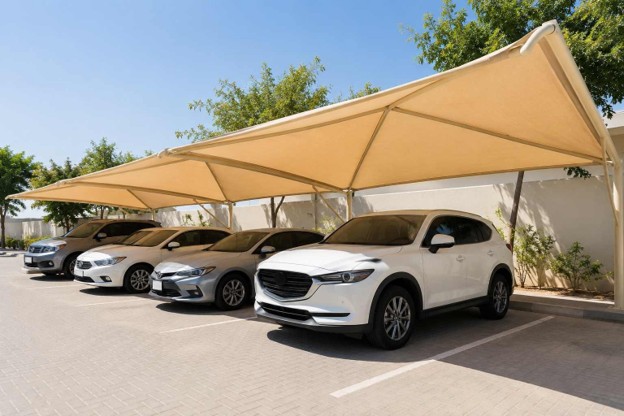
Qatar's summers are genuinely brutal on vehicles. Temperatures regularly reach 45°C or higher, and the solar radiation beating down on a parked car adds another layer of heat stress that the ambient temperature alone doesn't capture. A car left in direct sunlight can develop dangerously high interior and surface temperatures within minutes, affecting the dashboard, upholstery, battery, tyres, and paint. Car parking shades in Qatar aren't just about comfort. They're a practical form of vehicle heat protection that reduces direct solar exposure and limits the cumulative damage that comes from prolonged UV and heat contact.
Just How Hot Does a Parked Car Get in Qatar?
The outside temperature is only part of the story. Sunlight entering through glass is absorbed by interior surfaces, which then release heat in a greenhouse-like cycle that builds quickly.
Research shows a parked vehicle can reach more than 20°C above the surrounding air temperature. One experimental study in a hot climate recorded approximately 70°C inside an unshaded cabin and dashboard temperatures approaching 100°C. Vehicle interiors can reach 40°C above outside temperatures, with much of that rise occurring within the first five minutes after the engine and air conditioning are switched off. Even a few hours of direct exposure puts real thermal stress on the vehicle.
Heat Damage Points: What Actually Gets Damaged
The effects of prolonged heat are not limited to an uncomfortable cabin. Repeated exposure can contribute to deterioration across several vehicle components.
Exterior Paint and Body
UV radiation and heat work on paint and clear coats continuously. Repeated exposure over time leads to fading, loss of gloss and breakdown of the protective outer layer. When the protective layer breaks down, the underlying finish is more susceptible to oxidation and environmental damage. A parking shade creates a physical barrier between the vehicle and the sun, so that less solar radiation reaches the painted surfaces.
Battery
High temperatures speed up chemical reactions inside automotive batteries and contribute to water loss in conventional lead-acid designs. Sustained heat also accelerates corrosion of internal components. A shaded parking space won't prevent battery failure, but it does reduce one of the environmental pressures that contributes to battery ageing over time, which matters for vehicles parked outdoors in Qatar for hours every day.
Tyres
As a rough guide, tyre pressure changes by around 1 PSI for every 10°F (5.6°C) drop in temperature. The important thing is to check pressure when tyres are cold and follow the vehicle manufacturer's recommendation rather than adjusting based on a hot reading. Beyond pressure, long-term exposure to intense heat and sunlight accelerates ageing of the rubber compounds themselves.
Interior
The cabin is where heat damage is most visibly apparent. Dashboards, steering wheels, and upholstery repeatedly hit by intense solar radiation become discoloured, dry, and eventually brittle. Plastics and vinyl can crack. Adhesives used in trim, wraps, and other interior components can fail under prolonged heat. Keeping the vehicle under shade reduces the solar load on these surfaces and helps maintain the interior's condition and appearance.
Under-Bonnet Components
Rubber hoses, belts, seals and other components are already used for applications exposed to high temperatures. Prolonged environmental heat on top of that just adds to the overall thermal load unnecessarily. But regular servicing of fluids like coolant and brake fluid is still essential, and avoiding unnecessary heat exposure between service intervals does go hand-in-hand with proper maintenance.
How Parking Shades Address These Problems
The principle is simple: block the sunlight before it reaches the vehicle.
A well-designed canopy prevents direct solar radiation from falling on the roof, windows, bonnet, and exposed surfaces. This reduces how much heat is absorbed and keeps the vehicle significantly cooler than it would be sitting under an open sky.
Research comparing shaded and unshaded parked vehicles gives a sense of the difference shade can make. One study recorded cabin temperatures of 78°C in a small car and 65°C in a larger car parked in direct sunlight, compared with 44°C in the shaded small car under the same study conditions. These figures won't apply identically to every car parking shade or climate. Actual results depend on canopy design, fabric choice, orientation, ventilation, vehicle colour, and conditions. But the direction of the effect is consistent: less direct solar exposure means less heat absorbed.
In practical terms, this means a more manageable cabin temperature when the driver returns, reduced heat soaking across the vehicle's surfaces, and potentially slower deterioration of UV- and heat-sensitive components over months and years.
Learn more: Most Popular Types of Car Parking Shades & Designs
Why This Matters Beyond Comfort
A cooler car is more pleasant to get into, but the benefits don't stop there. Protecting paint and interior materials helps preserve the vehicle's appearance, which has real value when it comes to selling or trading in. Reducing prolonged heat exposure supports battery, tyre, and air-conditioning maintenance in a meaningful way. There's also a practical efficiency benefit: a vehicle that's been baking in the sun forces the air-conditioning system to work hard just to clear the accumulated heat before the cabin becomes comfortable. A shaded vehicle starts from a much lower thermal baseline, making that initial cooling considerably less demanding.
For fleet operators, these effects multiply across dozens or hundreds of vehicles exposed to the same conditions every day. The cumulative maintenance and replacement cost implications are worth taking seriously.
Choosing the Right Parking Shade Setup
Different parking situations have different requirements. A home may need a compact structure for one or two cars, while offices, hotels, schools, and fleet yards need solutions that cover multiple bays consistently.
A few things are worth thinking through before committing to a design. Coverage is the starting point. The canopy needs to actually protect the vehicle rather than leave significant areas exposed. Cantilever designs offer open access without central columns, which works well for tighter spaces or cleaner aesthetics; conventional multi-post structures suit larger layouts. The fabric should be specified for outdoor use in Qatar's climate, with proper UV and weather resistance. Open-sided designs allow air movement while still blocking overhead solar radiation, which helps with ventilation. The frame and foundations need to be designed for local wind conditions and the specifics of the site.
For larger installations, planning should also include parking circulation, vehicle size, pedestrian movement, drainage and how the structure fits into the overall design of the property. The regular inspection of the fabric, fasteners and structural elements increases the service life of the installation.
Read more: The Benefits of Installing Car Parking Shades for Your Home or Business
Final Thoughts
In Qatar’s summer, parking a vehicle in direct sunlight exposes it to a sustained combination of intense UV radiation and extreme heat. While a parking shade cannot prevent every form of vehicle wear, it can significantly reduce direct solar exposure and help protect paint, interiors, tyres, and other components that are vulnerable to prolonged heat and sunlight. For individual vehicle owners, businesses, and fleet operators, installing a proper parking shade is therefore better viewed as a preventive investment rather than simply a cosmetic addition.
For homes, offices, commercial properties, and fleet facilities, the right shade can reduce daily heat exposure, improve parking comfort, and help manage long-term maintenance costs. If you are looking for professionally designed car parking shades in Qatar, Electra offers car parking shade solutions built to withstand demanding outdoor conditions.
Related Blogs

How PA Systems Help Manage Emergencies in Large Buildings in Qatar
How to Choose a Reliable Fire Protection Company in Qatar
69dc76a796b90.png)
Outdoor UPS Vs Indoor UPS: Key Differences You Need To Know
Learn the key differences between commercial and residential fire-rated doors, including fire ratings, regulations, materials, and safety requirements.
Fire Alarm System Requirements in Qatar: A Guide for Building Owners